If you’ve ever signed your name on a residential lease agreement as a property owner, you’ve more than likely sat staring at a screen at 10 p.m. scrolling through 20 different policy quotes wondering if you actually have to pay for landlord-specific damage coverage every single month. I’ve talked to dozens of small-scale rental owners here in suburban Ohio, from retired teachers who picked up a second cottage in the Lake Erie region to recent grads who converted their old condo property into a short-term stay space, and every single one of them has asked some version of that exact same question before they sign up for any new insurance plan.
Back in 1998, when the first formal state-level rental property housing codes were updated across most midwestern US states, there were almost no clauses that required coverage for property damage caused by unforeseen tenant incidents. A lot of old school landlords who got their start back in that era still swear they never had to deal with mandatory rules, and they dismiss any attempt to even look up paid plans as unnecessary corporate overreach, but recent data from the National Multifamily Housing Council compiled in 2025 says nearly 62 percent of active landlords based in the US encounter some kind of mandated landlord insurance requirement tied to at least one part of their rental operation. Do you instantly assume that means the government will slap you with a fine if you skip signing a policy anytime you lease out a property? That common misperception actually fudges a lot of nuanced, highly localized details that most easy to digest social media posts about the topic never bother parsing out at all.
过渡来先 break down state-wide legal statutes
The actual first point no one tells new rental investors is that hard, government-enforced mandatory landlord insurance rules only exist in a tiny handful of US states as of the 2026 legislative session, mostly clustered in coastal high-risk zones south of the hurricane belt where repeated natural disaster recoveries overwhelmed local municipal fund reserves after the 2022 and 2023 seasons. What a whole lot of self-styled real estate gurus mislabel as a universally required legal mandate usually traces back to one of three other non-government parties that hold binding authority over your specific rental activity instead: your mortgage lender,your local housing association, or the terms of registered zoning for properties you intend to rent on a short-term basis. Last summer I helped a friend check the fine print for his new small mortgage taken out for a two-unit family duplex he bought outside Columbus, and the document explicitly stated he was required to carry a landlord insurance plan with at least 150 thousand dollars in property damage coverage before the lender would formalize the down payment transfer process no exceptions. Most people who are renting out a property rather than owning a fully paid off freehold structure rarely ever get to a point where no external stakeholder has some kind of stake minimizing financial risk on that parcel down the line.
过渡 next we talk about scenarios many don’t consider tied to unwritten renter safety rules

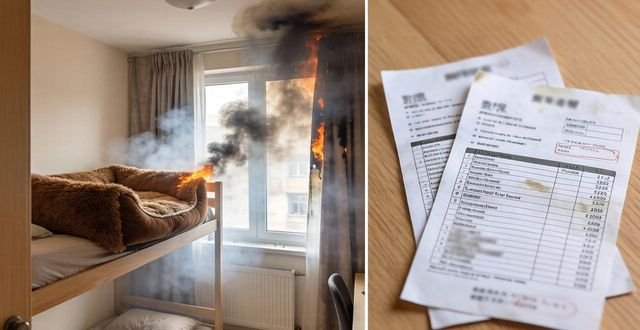
Last February, one of my acquaintances who operates a few pet-friendly single family rentals had a tenant whose overheated unattended pet bed set the second floor bedroom curtains on fire, and the fire damage cleanup invoices came out to roughly 8o thousand dollars. Because this landlord had not opted to carry specialized landlord coverage to keep those costs mitigated far earlier on, he had to pull directly from his personal family savings that were earmarked for his youngest kid’s upcoming tuition payments for the next college semester just to cover emergency repairs to make the home legally livable for neighboring households that had smoke seep through shared attic spaces. That experience drove a sharp debate among small rental operators on our local homeowner forum with one specific side arguing that any landlord who chooses to run multiple rental units should treat insurance as functionally mandatory even where no law forces it to, and the opposing camp saying forcing pay-in to these plans punishes low income aspiring small operators who can only barely scrape together capital for their first initial down payment on an extra property. Both viewpoints hold real tangible merit depending on where your specific situation falls on the spectrum of risk, of course, but thinking through where your operational vulnerabilities actually sit before you skip over all coverage options prevents a lot of avoidable headaches far before they arise unannounced on a random Tuesday night at 2 a.m. when a surprise toilet pipeburst floods your entire downstairs carpeted living room rental unit. You also want to remember that even seemingly trivial landlord decisions around allowing high risk pets that a tenant can bring into your unit have corresponding ripple effects on coverage terms, a facet of most people’s research that doesn’t get nearly enough air time in introductory explainers online.
过渡 exploring the middle ground paths
If you are wondering right at this moment whether you personally qualify under any applicable mandatory clauses for your geographic area, you don’t need to burn three grand to a property lawyer just to track that information down for casual informational purposes. Start simply by pulling the original paper copy of your closing mortgage paperwork out of that crumpled folder in your office filing cabinet where all the old utilities statements are stored, skim all the standard operating clauses printed on pages roughly 12 through 17 of your public municipal housing agreement register for your address zoning designation, and circle any segments that might reference required property liability riders. You may end up surprised to find that some small, local county-level ordinances you never even heard while you looked at property listings last year have been sitting within plain visibility the entire time. There currently are no blanket catch-all federal rules for mandatory landlord coverage anywhere in the US system, which means that there is no universal yes or no answer to frame that core searcher question — instead, the answer for you lies tangled up in the exact context specific to those exact paperwork elements that exist for nothing else except this one specific property.
过渡 moving on what this choice costs practical long term gains
Statistics pulled from real estate analyst firm Redfin’s 2025 nationwide landlord operating cost trends found that unplanned property liability expenses were seven times higher per average landlord household who opted to go without coverage as compared to peers who paid their monthly premium as standard ongoing overhead. When you sit weighing the relative long term tradeoffs here even accounting for all scenarios no legal mandate force you to buy any policy of that kind, does avoiding the fairly low relative monthly cost end up making functional financial sense? I know this seems a trivial simple point a lot of people scoff at until a truly unpredictable event completely wipes all their planned monthly operating budgets out in a single afternoon. We often frame conversations about rentals too isolated from daily realities we all live through.