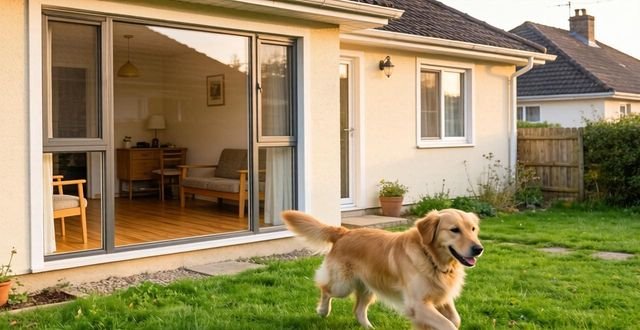
So you’ve got a rental property, a tenant with a couple of furry friends, and that little voice in your head asking who pays if the new sofa gets shredded. The standard landlord policy usually takes one look at a German Shepherd and runs for the hills,or at least it slaps an exclusion on anything with teeth and claws. This is where landlord insurance for landlords with pets stops being a niche product and starts being the only thing standing between you and a very expensive chewing habit.
Imagine the scene. You do the quarterly inspection, walk into the living room, and discover the baseboards look like they’ve been through a woodchipper. The carpet has a Jackson Pollock vibe, but it’s all urine stains. A regular dwelling fire policy just stares back at you blankly, because that’s “tenant damage” and specifically “pet damage,” which is basically invisible in the fine print. What you actually need is a policy designed for this exact mess, something that acknowledges Fido exists and isn’t going to magically learn manners just because there’s a security deposit.
A lot of new landlords make the mistake of assuming their basic coverage has them protected. They think, well, the tenant pays a pet deposit, so that’s the safety net. Then the tenant moves out and that five hundred dollar deposit covers maybe one claw mark on the doorframe. The rest of the three thousand dollar repair bill lands squarely on the owner’s shoulders. That’s the painful gap that specialist pet-friendly landlord insurance fills. It flips the script from “you should have known better” to “okay, let’s process the claim for that destroyed subfloor.”
Let’s talk about what this actually looks like in the real world, not just the marketing brochure. One policy from a standard carrier might offer “accidental damage” but then explicitly exclude damage caused by domestic animals. Another one, a more modern pet-inclusive package, will separate the coverage into two clear buckets. The first bucket handles the big stuff, like if the tenant’s pit bull chews through a drywall section to get at a mouse. The second bucket deals with the slow creep, the gradual destruction, the smell that embeds itself into the padding beneath the carpet. That second bucket is rare, and it’s the one that separates the real product from the fake one.
Why do insurance companies even bother excluding pets in the first place? Walk through the logic from their side. An untrained dog can cause more damage in an afternoon than a leaky pipe causes in a month. The claims history is brutal, full of scratched hardwood, torn window screens, and doors that look like a bear tried to break in. So the standard response is to just say no. But the clever underwriters have realized something important. Landlords aren’t going to stop renting to pet owners, because the pet owner market is huge and often willing to pay higher rent. So instead of a blanket ban, they’ve built products with higher deductibles specifically for pet incidents, plus a clear definition of what counts as “malicious damage” versus “normal wear and tear.”
Here’s a real conversation that happens in landlord forums all the time. Someone posts a photo of a door that has been completely hollowed out from the bottom six inches. The comments flood in, all saying the same thing. “That’s why I have a no-pets policy.” But then the original poster replies that the tenant is otherwise perfect, pays on time, has been there for four years, and the rest of the house is immaculate. The problem isn’t the dog; the problem is the policy that doesn’t talk about dogs. That landlord needed a plan that raises the premium by maybe fifteen percent but adds a rider covering damage from known pets. He needed landlord insurance for landlords with pets written into the declaration page, not just promised over the phone.
So how do you actually find this without getting lost in a maze of chatbots and hold music? Start by asking one very direct question. Does your policy have an exclusion for animal damage, or does it offer a specific endorsement for domestic pets? If the agent hesitates or starts talking about liability only, move on. Liability is a whole separate conversation, the one where the dog bites the mailman and you need to know who pays the lawsuit. That’s important too, but it’s not the same as paying for new kitchen cabinets. You want the property damage part, the interior part, the stuff that makes the apartment rentable again.
And here’s a pro tip that actual property managers use. When you get a quote, ask them to run two scenarios. First, a standard policy with a pet exclusion. Second, the same property but with a known large breed dog on the lease. Compare the premium difference. Sometimes it’s shockingly small, maybe twenty dollars a month, to add that pet damage coverage. Other times it doubles the premium, which tells you the insurer has either had terrible claims in your zip code or they just don’t want the business. That’s useful information too, because it tells you who to avoid.
Think about the end of the lease term for a moment. The tenant walks out, hands over the keys, and says the dog was an angel. You walk in and see the truth. The angel had a secret life involving the door frames and a specific corner of the living room carpet. Without the right insurance, you’re either eating that cost or fighting a legal battle to get blood from a stone. With the right policy, you file the claim, pay your higher deductible, and get the check to hire the flooring guy next week. The property turns over faster, the vacancy gap shrinks, and you don’t spend every evening for a month feeling resentful.
Some landlords try to self-insure against pet damage. They set aside an extra five hundred bucks per pet per year in a separate account. That works fine if the damage is a scratched floor. It falls apart the second you need to replace an entire HVAC duct because a terrier decided to remodel from the inside out. Real pet damage can hit five figures faster than you’d believe, especially if there’s water damage involved because the dog chewed a toilet supply line. That’s the nightmare scenario that turns a small claims issue into a major loss. Insurance exists for the catastrophe, not for the predictable small stuff.
At the end of the day, the rental market has spoken pretty clearly. People have pets, and they’re not giving them up to live in your apartment. They’ll just rent from someone else who gets it. So the smart move isn’t to ban the animals; it’s to charge the right rent and buy the right product. Look for a policy that specifically names pets in the covered perils section, not just in the liability section. Read the definitions of “damage” carefully. Does it include soiling? Does it include scratching? Does it include the kind of chewing that exposes electrical wiring? The more specific the language, the better the protection.
Next time you renew your policy or shop for a new one, bring up the pet question in the first phone call. Don’t let them hide behind generalizations. Ask point blank if they offer a product that functions as true landlord insurance for landlords with pets, not a standard policy pretending to be flexible. The difference will show up in the claim check, years from now, when you’re standing in an empty unit that smells like Febreze and regrets. Get the right coverage, sleep better at night, and let the dogs have their couch. Just make sure it’s the landlord’s insurance that pays for the next one.