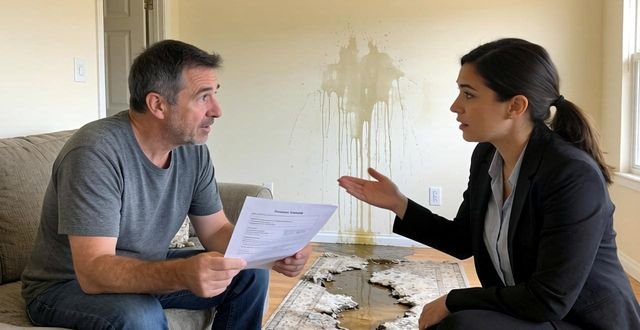
Picture a Friday night. You are finally off the clock, maybe scrolling through your phone, and then a text pops up from your renter. There is a new stain on the hardwood floor. Or a hole in the bedroom drywall. Or the kitchen cabinet door is just… hanging there. Your first thought is always the same. Will my insurance handle this? Or am I about to pay for this nonsense out of my own pocket?
Here is the cold, hard truth that a lot of property owners learn way too late. Your standard landlord insurance policy is absolutely fantastic at a few specific things. Think fire. Think a tree branch crashing through the roof. Think a lightning strike. These are sudden and accidental events, and the dwelling coverage usually kicks in without a huge fight. But interior damage caused by the human being you hand the keys to every single month? That is a completely different beast. You see, policies are written to exclude what the industry calls “tenant negligence” or “accidental damage” that is not related to a named peril. If your tenant drops a bowling ball on the vinyl flooring, that is not a fire. That is not a storm. That is just a bowling ball and a very bad decision.
So what are we actually paying for here? Let me break down the line that nobody reads until they are crying.
Most landlord policies separate the world into two big buckets. The first bucket is for perils like wind, hail, vandalism,and theft. Notice the word vandalism. If your tenant gets mad and punches every wall on the way out the door, that is malicious destruction. That usually has coverage, but get this. You still need to prove it was intentional malice. If they just slipped and fell into the wall with their shoulder, that is now an accident. Insurance adjusters love this game. They will ask for police reports, text messages, and witness statements. They want to see evidence of a broken lease agreement or a screaming match. Without that hard proof, the claim flips from vandalism to “oops” really fast, and “oops” is not a covered peril.
The second bucket is for the tenant’s personal liability. Wait, you might say, isnt that for them hurting someone? Yes. That policy is for the guest who trips over a rug. That insurance is not for your drywall. It is for bodily injury and legal fees for the person renting the space. It does not fix the scratched-up fridge or the crayon drawings on the bedroom wall. You cannot subrogate against your own tenant’s liability policy for interior damage unless you have a specific clause in the lease that says they are responsible for all cosmetic and structural repairs. And even then, good luck collecting a deductible from someone who is already late on rent.
Let me give you a real scenario that happens in Denver, Austin, and Orlando every single summer. A tenant decides to foster a large dog. You said no pets in the lease. They do it anyway. The dog gets scared during a thunderstorm and scratches deep gouges into every interior door in the house. You come through for the move-out inspection and you want to scream. The repair estimate is four thousand dollars. You file a claim on your landlord policy. The adjuster calls you three days later and asks a simple question. Was the damage caused by a covered peril like fire or explosion? You say no. They say, then we are denying the claim. Interior scratching from an unauthorized animal is considered wear and tear or tenant neglect. Neither is covered. That four grand is on you, my friend. Or on the security deposit, if you still have it.
This is the hidden truth that turns landlords into paranoid detectives. The insurance company is not your partner. They are a risk calculator. They will pay for the big scary stuff that makes the house unlivable, like a kitchen fire. But the slow death by a thousand cuts? The stained carpet, the chipped countertops, the greasy handprint stains that never come off the paint? They will leave you standing in the living room holding a mop and a bill. So what is the actual solution here? Do you just accept that interior damage is your problem?

You start acting like a CEO instead of a nice person. First, you rewrite the lease agreement with surgical precision. You add a clause that says any interior damage beyond normal wear and tear will be repaired using the security deposit first, and if the deposit is not enough, you will pursue the tenant directly in small claims court. Second, you require the tenant to carry renter’s insurance that includes a specific rider for damage to the landlord’s property. Yes, those policies exist. Most tenants will buy the basic fifteen-dollar policy that covers their couch. You need to demand the thirty-dollar version that adds accidental damage coverage to the unit itself. Put that requirement in writing before they ever see the keys.
But here is the part where I have to be really honest with you. Even with all those documents and all those signatures, you are still going to eat some costs. It is the math of being a landlord. If you file too many small claims for scratched floors or broken blinds, your premium will skyrocket or the carrier will just drop you entirely. Insurance companies track your loss ratio. Two small interior damage claims in three years, and you suddenly become high risk. So you have to pick your battles. Anything under two thousand dollars, you pay it yourself and raise the rent next cycle. Anything over that, you pray it qualifies as vandalism and you cross your fingers for an adjuster who woke up in a good mood.
I watched a landlord in Phoenix lose his mind over this exact issue last summer. The tenant had a party. Someone spilled red wine on the brand new white carpet in the living room and the hallway. That is three rooms. The tenant tried to clean it with bleach and made it worse. The landlord filed a claim for five thousand dollars in carpet replacement. The insurance company sent out a field adjuster who took photos and then denied the claim in writing three weeks later. The reason? The policy covered “sudden and accidental discharge from a plumbing system.” Red wine from a solo cup is not a plumbing system. The adjuster literally wrote that sentence. The landlord ended up selling the property four months later because he was tired of the emotional roller coaster.
Do you see the pattern here? Interior damage falls into this gray zone that insurance companies absolutely love. It is not important enough for them to pay quickly, but it is important enough for them to raise your rates if you ask too many questions. The only real defense is prevention and documentation. You do a video walkthrough before the tenant moves in. You do another video walkthrough the day they leave. You save those videos for three years. You also install cheap laminate flooring instead of hardwood, because laminate costs forty cents on the dollar to replace. You use semi-gloss paint that wipes clean instead of flat paint that stains forever. You remove the fancy light fixtures and put in basic builder-grade fixtures. You are essentially making the interior damage-proof, or at least cheap enough to fix without crying.
One more thing before you close this tab. Never assume the tenant knows what they are allowed to do. Most renters genuinely believe that landlord insurance is a magic shield that covers every scratch, scuff, and spill. They think that because you own the property, your policy acts like a blanket. They do not understand the concept of tenant negligence exclusions. So you have to educate them up front. Put a single page in the lease packet that says, in plain English, “Your security deposit pays for interior damage. My insurance does not.” Copy that sentence in bold twelve times if you have to. When they sign that page, you have turned your legal position from weak to strong.
At the end of the day, you are playing a numbers game. You can buy the most expensive landlord policy with the most endorsements, and interior damage from a clumsy tenant will still slip through the cracks. The system is built that way on purpose. The insurance industry decided decades ago that wear and tear and accidental tenant damage are the landlord’s responsibility. They will cover the roof falling in. They will not cover the dent in the fridge door. So your job is to collect enough rent every single month to build a separate savings account called the “interior damage slush fund.” You put two percent of the rent into that account every month. When the tenant ruins the blinds, you pull from that account. You do not call the insurance company until something is actually on fire or flooding.
If you take one thing away from this whole messy conversation, let it be this. Read your declarations page right now. Find the section that says “Coverage for Damage to Property of Others” or “Perils Insured Against.” If you see the words “accidental damage” or “tenant negligence” listed as an exclusion, you just learned something valuable. You learned that your tenant holds more power over your bank account than the insurance company does. And that uncomfortable feeling? That is the feeling of being a smart landlord who finally understands where the real risk lives. Now go update your lease agreement and stop expecting the insurance fairy to show up for a paint stain.