
Introduction: Are Landlords Legally Required to Have Insurance?
One of the most common questions U.S. property owners ask is whether landlord insurance is legally required. The answer is nuanced. While most states do not explicitly mandate Landlord Insurance by statute, landlord insurance requirements by state are shaped by a combination of state laws, lender rules, and legal liability standards.
Failing to carry adequate landlord insurance can expose rental property owners to severe financial and legal consequences, even in states where coverage is not formally required. This article explains how landlord insurance requirements vary by state, how legal obligations are enforced in practice, and what landlords must do to remain compliant.
Federal Law vs State-Level Landlord Insurance Requirements
There is no federal law that universally requires landlord insurance. Insurance regulation in the United States is primarily handled at the state level, meaning requirements and expectations can vary significantly from one state to another.
However, the absence of a federal mandate does not mean landlord insurance is optional in practice. Courts, lenders, and state-level housing regulations often create de facto requirements.
Are Landlords Required to Carry Insurance by State Law?
In most states, landlord insurance is not explicitly required by statute. Instead, states rely on general legal principles such as negligence, premises liability, and duty of care to hold landlords financially responsible for damages and injuries.
Practical Reality
-
Landlords are legally liable for unsafe conditions
-
Tenants and guests can file lawsuits for injuries
-
Property damage claims can exceed personal assets
As a result, landlord insurance becomes a critical compliance tool even where not legally mandated.
Mortgage Lender Requirements and Landlord Insurance
For most rental properties with financing, lenders require landlord insurance as a condition of the loan.
Common Lender Requirements
-
Dwelling coverage at replacement cost
-
Named mortgagee on the policy
-
Minimum liability limits
-
Continuous coverage throughout the loan term
Failure to maintain required landlord insurance may result in:
-
Force-placed insurance (at higher cost)
-
Loan default
-
Legal action by the lender
From a compliance perspective, lender requirements often function as mandatory insurance rules.
Landlord Liability Laws and State-Level Standards
While states may not mandate insurance explicitly, they do enforce liability standards that effectively require coverage.
Premises Liability Laws
Most states follow negligence-based liability standards that require landlords to:
-
Maintain safe premises
-
Repair known hazards
-
Comply with building and housing codes
If a tenant or visitor is injured due to unsafe conditions, landlords may be held financially liable regardless of insurance status.
Landlord Insurance Requirements by State: Key Variations
Although the core principles are consistent, landlord insurance requirements by state differ in how liability, habitability, and risk exposure are handled.
States with Higher Liability Exposure
States with tenant-friendly laws often expose landlords to greater legal risk, including:
-
California
-
New York
-
New Jersey
-
Massachusetts
In these states, higher liability limits and comprehensive coverage are strongly recommended.
States with Elevated Natural Disaster Risk
States prone to specific hazards may require or strongly encourage additional coverage.
-
Florida & Gulf Coast: Windstorm and hurricane considerations
-
California: Earthquake and wildfire exposure
-
Midwest: Hail and tornado risks
Standard landlord insurance may not cover these risks without endorsements.
Building Codes, Habitability Laws, and Insurance Compliance
State and local housing codes impose habitability standards that directly affect insurance requirements.
Examples of Habitability Obligations
-
Functional plumbing and electricity
-
Structural safety
-
Weatherproofing
-
Fire safety measures
Failure to meet these standards can result in denied insurance claims or increased liability exposure.
Minimum Liability Coverage Expectations by State
While states do not publish official liability minimums for landlord insurance, industry standards vary by risk environment.
Common Liability Coverage Ranges
-
Low-risk states: $300,000 minimum
-
Moderate-risk states: $500,000 recommended
-
High-litigation states: $1 million or more
Many landlords supplement their policies with umbrella insurance to meet higher liability expectations.
Insurance Requirements for Multi-State Landlords
Landlords operating rental properties in multiple states face added complexity.
Compliance Challenges
-
Varying legal standards
-
Different risk exposures
-
Multiple insurer requirements
Multi-state landlords often benefit from working with insurers experienced in national portfolios and regulatory variation.
Consequences of Not Meeting Landlord Insurance Requirements
Even when landlord insurance is not legally required, failure to carry adequate coverage can lead to severe consequences.
Potential Outcomes
-
Personal liability for lawsuits
-
Loss of rental income
-
Loan default
-
Regulatory penalties
-
Financial insolvency
From a risk management perspective, landlord insurance is a foundational requirement, not an optional expense.
How to Stay Compliant with Landlord Insurance Requirements
Landlords can maintain compliance by following best practices aligned with state laws and lender expectations.
Compliance Checklist
-
Review state landlord-tenant laws regularly
-
Meet lender insurance requirements
-
Adjust coverage for state-specific risks
-
Maintain documentation of coverage
-
Reassess policies annually
Working with licensed insurance professionals helps ensure ongoing compliance.
Landlord Insurance and Tenant Insurance Requirements
Some states allow or encourage landlords to require tenants to carry renters insurance. While this does not replace landlord insurance, it reduces risk exposure.
Important Distinction
-
Renters insurance protects tenant belongings
-
Landlord insurance protects property owners
Requiring renters insurance complements—but does not replace—landlord insurance coverage.
Common Myths About Landlord Insurance Requirements
Myth 1: Insurance Isn’t Required if the Property Is Paid Off
False. Liability exposure exists regardless of mortgage status.
Myth 2: Homeowners Insurance Is Sufficient
False. Homeowners insurance typically excludes tenant-related risks.
Myth 3: Tenants Are Responsible for All Damages
False. Landlords retain legal responsibility for structural and safety issues.
Conclusion: Meeting State Requirements Through Proper Coverage
While most states do not explicitly mandate landlord insurance, landlord insurance requirements by state are enforced indirectly through liability laws, lender rules, and regulatory standards. In practice, carrying adequate landlord insurance is essential for legal compliance and financial protection.
By understanding state-specific risks, meeting lender expectations, and maintaining sufficient liability coverage, landlords can operate confidently and responsibly across the U.S. rental market.
Ultimately, Landlord Insurance is not merely a legal safeguard—it is a strategic investment in long-term property ownership success.
Related Posts
Do I Need Landlord Insurance for a Rental Property? Legal, Financial & Risk-Based Guidance
[caption id="attachment_82" align="alignnone" width="300"] A visual guide helping new landlords…

Landlord Insurance Coverage for Rental Property: What Every U.S. Landlord Should Know
[caption id="attachment_64" align="alignnone" width="300"] Visual concept of landlord insurance coverage…
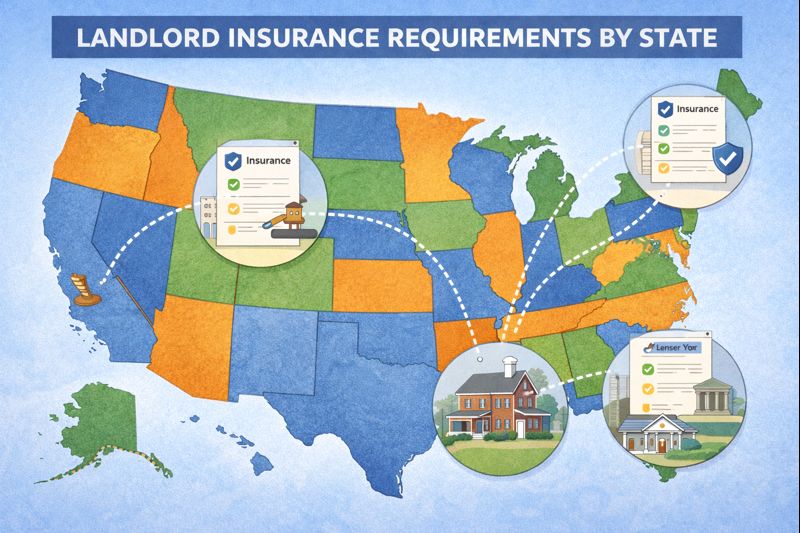
Landlord Insurance Requirements in the United States: State Laws, Lender Rules & Compliance Guide
[caption id="attachment_107" align="alignnone" width="300"] Overview of how landlord insurance requirements…